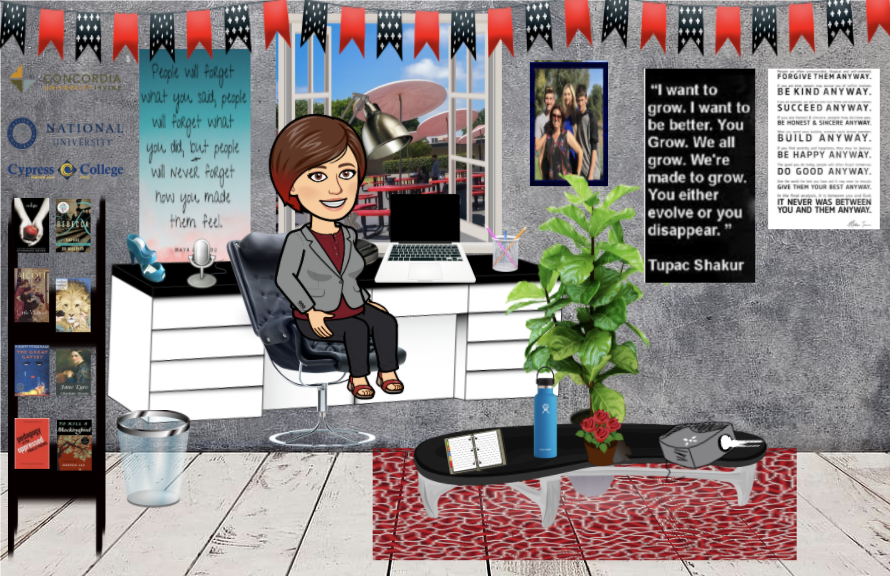
Last March if you would’ve asked me that we would continue to be in quarantine and fully online I would have said no way. But I would’ve been wrong, very wrong. Here we are nearly a year later and the whole world has gone virtual. I was lucky because I have taught online courses before at the high school and college levels. I helped develop our district’s e-learning program and set it up so that our e-learning teachers could be successful. I’m also rather techy and enjoy playing around with technology and programs and learning how to do new things. Knowing that you might say that I was built for this world that we are in today. While I have a pretty good background and handle on things that doesn’t mean that my teachers, students, and my community do.
Teachers
It’s rather funny actually thinking back with my more senior teachers who have never embraced technology – they really didn’t use email and they certainly did not incorporate any of the new technologies into their classes. So when we had to tell them that school was going virtual many didn’t even own a computer or internet. We had to check out computers to teachers and provide them with hotspots just to get started. Needless to say, the learning curve was steep. I spent countless hours creating videos and written instructions on just the basics. Simple things like how to access your email or click on the hyperlink. At times the mountain seemed insurmountable but we powered on and as a team, we have definitely made strides.
I want to honor the commitment and work and struggles of my teachers, some of whom spent weekend after weekend at my dining room table learning how to set up their classes and navigate the learning management systems. I think that commitment is the key to being successful in distance learning. You have to commit to being an amateur, commit to being lost, commit to continual improvement.
Students
In distance learning, teachers were not the most difficult part of my journey. Students struggled to access the curriculum, to engage in the classes, and it was clear that though they know how to use social media in many ways – they definitely did not have the skill set to appropriately participate in an online curriculum. So, the second thing we found necessary to be successful in distance learning was to start from scratch and develop lessons in technology, where to click and not click, how to access the information, and how to do things like organizing your email so you aren’t overwhelmed by your inbox and add a signature.
Parents
Still, the students weren’t the most difficult part of the journey; nope it was their parents. Parents who have not used technology, parents who don’t like to step outside of the traditional, parents who were worried about the safety and well-being of their students, parents who felt out of control and didn’t know how to function in this new distance-learning realm. The phone calls seemed to come in constantly with confused, angry parents wanting schools to open back up, arguing that they aren’t teachers and shouldn’t be having to teach their own children so what are we going to do about it. While I would love to say that we solved this issue, I can’t – it is ongoing. We have spent time disseminating information, training parents, and working to ease their worries and demonstrate that distance learning can work.
As we are now a year into this, I can say that you have to be all in, you have to take a few steps back and train on the basics to remove barriers to access. There are so many other things I could address, but in this brief reflection, this is where I found my start. As a leader, you have to get the commitment of everyone involved and lead by example. Grit and yet, are your best friends. Hang in there, because, despite the work that it takes to run a successful distance learning program during a pandemic where you feel exhausted on daily basis, there are also millions of little triumphs that will fuel your spirit and make it so you can power forward.
 The Principal Has Homework